News · STEP UP · Prabhu Deva
STEP UP: Building a Stage for the Next Generation of South Asian Dance
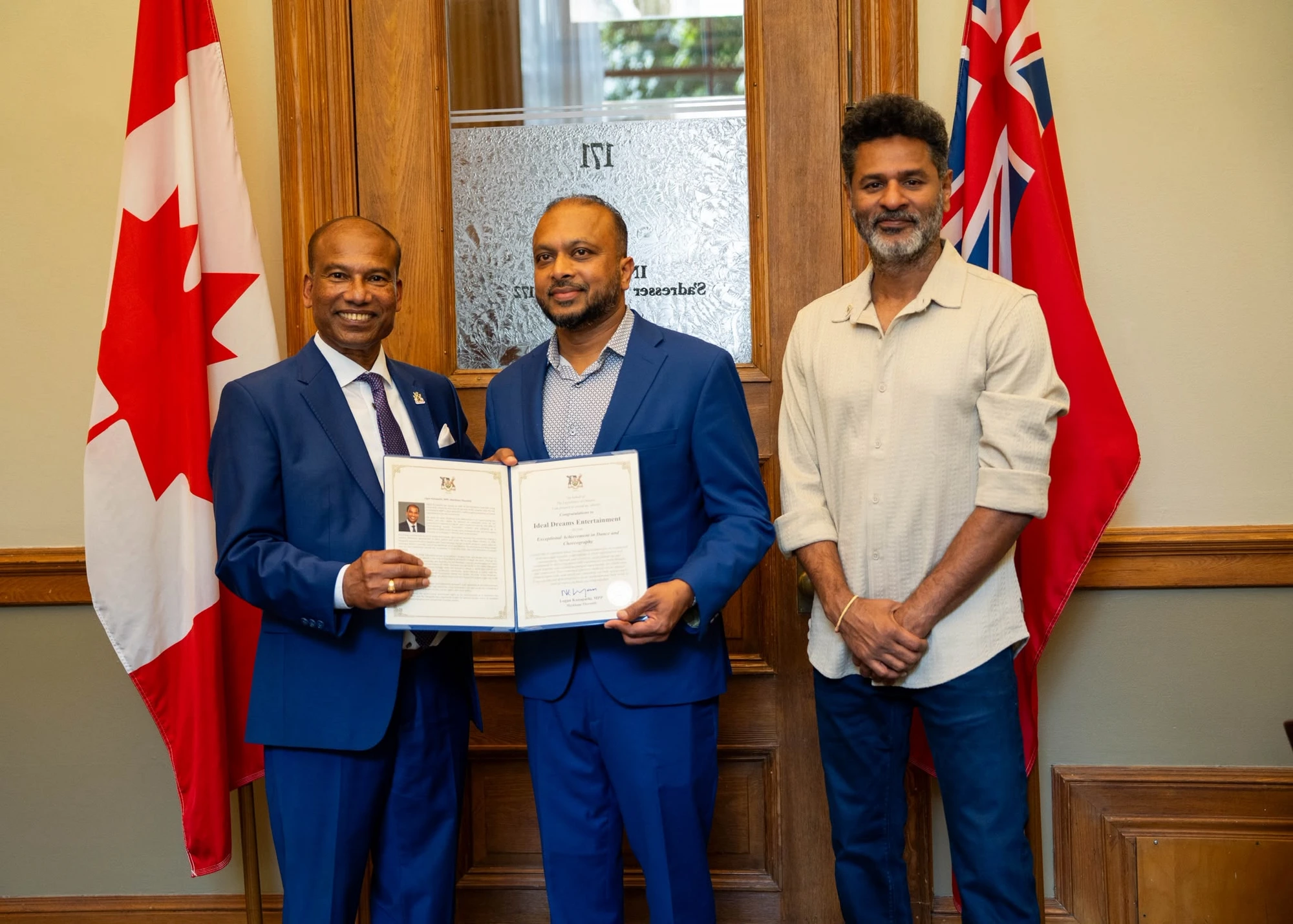
On August 22, 2026, Toronto became the stage for a meeting between legacy and the next generation.
STEP UP, presented by Ideal Dream Entertainment, brought eight dance crews together for a live championship featuring one of India's most influential dance figures, Prabhu Deva.
But the significance of STEP UP went beyond a night of competition.
At its heart, the event reflected a broader idea: that South Asian talent in the diaspora should not simply be an audience for culture created elsewhere. It should have the platforms, infrastructure and opportunities to create, perform and reach audiences of its own.
That vision is closely connected to Shaji Nada, the Toronto-based producer, founder and entertainment executive behind Ideal Entertainment and co-founder of Maajja with A.R. Rahman. Nada describes his broader mission as building platforms and infrastructure that allow South Asian voices to reach the global stage.
STEP UP is one expression of that philosophy.
From Watching Legends to Sharing Their Stage
For generations of Indian audiences, Prabhu Deva has represented the transformative power of dance.
His movement helped redefine choreography in Indian popular cinema, combining classical influences with hip-hop, funk and street styles and creating a vocabulary that inspired dancers across generations. STEP UP brought that legacy directly into Toronto, placing an established icon in the same space as emerging performers.
For the dancers, this was not simply an opportunity to watch a legend.
It was an opportunity to step onto the same stage.
The competition featured eight finalist crews:
AJ Dance, K2B Movement, Mumbai Troopers, Prima Dance School, ADA, Mudra, ARIMA and Maja Crew.
Each team arrived with its own identity and interpretation of dance, representing the range of styles and creative energy developing within Canada's South Asian and multicultural dance community.
The structure of STEP UP was deliberately built around the dancers. Crews entered through online submissions, competed through the qualification process, and the Top 8 earned their place at the live finale. The championship also included an Audience Choice Award, putting the audience directly into the experience.
The Shaji Nada Vision: Build the Infrastructure
For Shaji Nada, the work has consistently extended beyond individual events.
His career has been shaped around a belief that South Asian creators need more than exposure — they need infrastructure.
Through Ideal Entertainment and Maajja, Nada has worked across film, music and entertainment with a focus on culturally specific work that can travel internationally. His partnership with A.R. Rahman, work on projects including 99 Songs, and the development of Maajja all sit within that broader philosophy.
In his own writing, Nada has argued that diaspora storytelling is moving into a new phase: one where South Asian stories should no longer be treated simply as a niche or category, but as part of the centre of global culture.
That requires building the systems that allow artists to move between communities, industries and countries.
STEP UP applies that same thinking to dance.
The question is not simply, Can talented dancers perform?
The more important question is:
What happens when you build a serious platform for them to perform on?
Toronto Is More Than an Audience
Toronto has one of the world's most diverse South Asian communities. But diversity alone does not create an entertainment industry.
Industries are built through stages, festivals, labels, producers, venues, audiences, partnerships and opportunities.
That is where an event such as STEP UP becomes significant.
The dancers are not being presented simply as an opening act for a visiting celebrity. They are the central participants in a championship designed around their craft.
And the opportunity does not necessarily end when the Toronto lights go down.
The STEP UP champion earns the opportunity to perform at YAALL Festival in Chennai, valued at $10,000, as well as a featured appearance in an upcoming Maajja music video.
That creates something bigger than a trophy.
It creates a bridge.
A dancer can begin in Toronto and find an opportunity in Chennai. A Canadian dance crew can become part of a South Asian music platform. A local performance can become an international introduction.
That movement between cities and cultures is precisely the kind of ecosystem Nada has described as necessary for the next chapter of South Asian storytelling and entertainment.
From Maajja to the Dance Floor
The connection to Maajja is particularly meaningful.
Co-founded by Shaji Nada and A.R. Rahman, Maajja was built as an independent music platform for South Asian artists, with an emphasis on artist ownership and global reach.
STEP UP extends that philosophy into another creative discipline.
Music and dance have always been connected. A song can create a movement; a movement can redefine a song; and a performer can transform both.
By offering the winning crew a potential place within a Maajja music video, STEP UP creates a direct connection between Canada's dance community and a wider South Asian creative ecosystem.
It turns competition into opportunity.
A Different Definition of Success
The easiest way to measure an event is by attendance, production scale or the celebrity on the poster.
But cultural events can be measured differently.
Who received an opportunity?
Who was seen for the first time?
Who found an audience?
Who was inspired to take their craft seriously?
And what infrastructure remains after the event is over?
Those questions are especially important for diaspora communities.
The first generation often builds an audience.
The next generation builds a creative identity.
The generation after that builds an industry.
STEP UP sits somewhere within that transition.
It gives dancers a platform, gives audiences a reason to gather around emerging talent, and creates a connection between established Indian entertainment and the artists growing within Canada's own communities.
The Next Chapter
Shaji Nada's work has often centred on one underlying principle: build the things that allow artists to go further.
His Journal describes this philosophy through the idea of cultural infrastructure — the systems, partnerships, platforms and opportunities that allow South Asian stories and artists to travel without losing their identity.
STEP UP is a tangible version of that idea.
A stage in Toronto.
Eight crews.
One championship.
A legendary artist.
And an opportunity that can potentially take a Canadian dance crew all the way to Chennai.
That is what makes the event bigger than a competition.
It is a statement about where South Asian entertainment in Canada can go next.
The future is not simply about bringing India's biggest names to North America.
It is also about discovering who the next generation of names will be — and giving them a stage big enough to begin.
STEP UP is one such stage.