Essay · Production · A.R. Rahman
Producing Across Cultures: Lessons from Working with A.R. Rahman

I met A.R. Rahman in 2016. I had spent the first part of my career in entrepreneurship and operations — domains where speed, optimization, and the relentless reduction of friction are virtues. Producing alongside one of the most singular composers of our era taught me, almost immediately, that those instincts do not transfer to creative work without serious translation. They have to be re-tuned, and sometimes set aside entirely.
The first lesson is the obvious one: a great composer does not work on your timeline. Rahman sahib works on the music's timeline. There is no shortcut. You can fund the studio, assemble the players, clear the schedule, and pre-sell the territories — but the song will arrive when it is ready to arrive. As a producer, the temptation early on is to push. To "drive the process." To turn artistry into a project plan with milestones and burndown charts. That instinct is wrong, and learning to suppress it was the single most important thing I learned in the first two years of our partnership.
The second lesson, which is less obvious, is that protecting the creative timeline is itself a discipline. It is not the same thing as having no plan. A producer's job, when working with a composer of this caliber, is to build a scaffolding strong enough that the artist can wander inside it. That scaffolding has many parts. Budget runway that doesn't force a premature decision. Studio time booked far enough in advance that the day-of pressure is removed. Players and engineers chosen not just for skill but for temperament — people who can hold their craft steady while the room is searching. Stakeholder communication that absorbs anxiety from financiers and distributors so it never reaches the artist. None of this is glamorous. All of it is essential.
The third lesson, and the one I think about most, is that great cross-cultural work requires you to give up the fantasy that you can fully understand the other side. When you produce music or film that moves between Tamil, Hindi, English, Arabic, and the half-dozen sonic vocabularies Rahman sahib draws on routinely, you are constantly working at the edge of your own competence. You are responsible for outcomes you cannot fully evaluate in real time. The answer is not to fake fluency. The answer is to hire deeply, defer respectfully, and learn aggressively. A good producer in this context is a translator of intent, not a curator of taste.
The fourth lesson is about ego. There is none. Or rather, what little ego is in the room is so deeply subordinated to the work that you stop noticing it. The first time I sat through a session where Rahman sahib rewrote a near-finished arrangement at 2 a.m. because something in it had been bothering him for three days, I understood that "good enough" is not in his vocabulary, and therefore could not be in mine. That standard is contagious in the best way. It also, in case it needs saying, is exhausting in the best way.
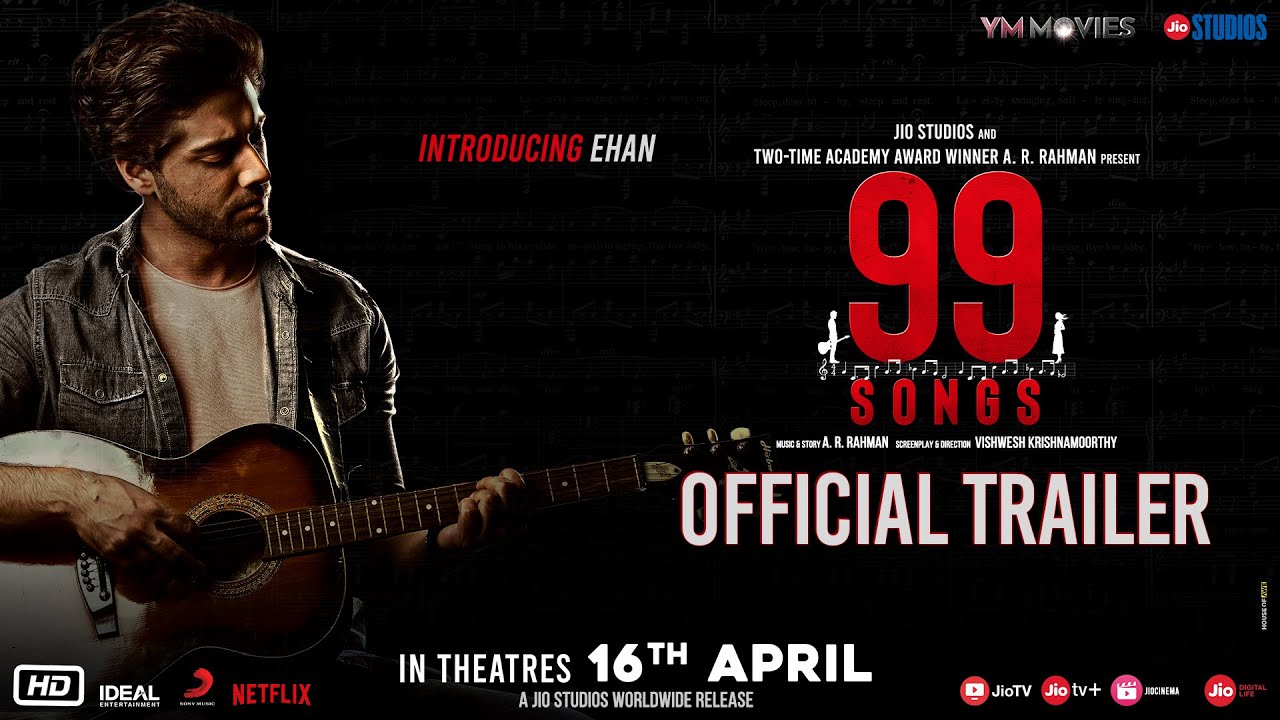
99 Songs was a defining project for me, not because of its commercial trajectory but because of what it required. It was a film built around a score, a score built around an idea of artistic integrity that resisted easy categorization, and a release that had to navigate a global pandemic. We learned a great deal about resilience, about how to keep a creative team aligned across continents, and about the importance of patience when the world refuses to cooperate. LeMusk, our immersive experience, pushed us further into the question of what music can be when it is freed from the conventions of a single playback medium. Both projects are, in different ways, arguments that craft and ambition are not luxuries.
If I had to distill the producing philosophy I have arrived at, it would be this: build the scaffolding, protect the timeline, hire deeply, defer respectfully, learn aggressively, and never, ever try to optimize the part of the work that resists optimization. The job is to make space for the work to be as good as it can be — and then to get it to the audience without compromising what made it worth making in the first place.
That is harder than it sounds. It is also, when it works, the best job in the world.
— Shaji Nada
Related Reading